Buying a Palo Alto Historic Home: Check Before Remodeling
Before buying a Palo Alto home that you intend to remodel, verify its historic status and ask City Planning how your specific changes would be reviewed. An older construction date is not a historic designation. A renovated appearance is not proof that another addition, window replacement or exterior redesign will be approved.
The useful purchase question is: Does this home work for you if the planned changes cannot be approved as drawn? Answer that before making the purchase depend on a future remodel.
Start with the parcel, not the architectural style
This guide applies to homes within the City of Palo Alto, not East Palo Alto or unincorporated Santa Clara County. Confirm municipal jurisdiction with the street address and Assessor’s Parcel Number, or APN, before applying these rules.
Start with the City’s Parcel Reports. The report separates the assessor’s year-built information from “Historic Status,” which indicates inventory listing, district location or historic significance. Those are different questions. Craftsman details, an older roofline or a listing’s “historic charm” description do not establish the official status. 1
Save the report and ask Planning to explain the status for that parcel. If it is blank or unclear, do not treat that as permission to alter the home: the City says unevaluated properties may need research to determine historic-resource status and the necessary review. 2
Find the inventory category and district status
The Palo Alto Historic Inventory is the City Council’s designated list of sites, structures and districts. The City organizes individual properties into these categories:
Category 1, “Exceptional Building”: pre-eminent national or state importance.
Category 2, “Major Building”: regional importance.
Category 3 or 4, “Contributing Building”: a good local architectural example related to a neighborhood grouping’s character.
These are significance classifications, not a rating of a home’s condition or desirability. Check the inventory list linked from the City’s Historic Registers page, then ask staff for the applicable designation record and available individual historic-resource documentation. A survey evaluation or nomination is not the same document as an adopted local designation. 3
District boundaries matter too. Professorville and Ramona Street are locally designated districts. Green Gables and Greenmeadow are also National Register districts; the City identifies a locally designated Professorville extension that is not federally listed. Ask which boundary covers the actual parcel rather than relying on a neighborhood name. 4
Also ask whether the property is listed in—or has been deemed eligible for—the California Register of Historical Resources or National Register of Historic Places. The City’s project-review guidance includes those resources, not just locally inventoried homes. Local inventory, district location and state or national eligibility should not be collapsed into one yes-or-no label. 2
Ask which review route applies to your remodel
The City’s currently linked historic-review bulletin distinguishes Category 1–2 properties, Category 3–4 properties downtown, and properties in local historic districts from Category 3–4 properties elsewhere. It describes the first group under the local historic-preservation ordinance; the second may instead involve historic-resource review through the California Environmental Quality Act, or CEQA, for discretionary development applications. State or national listing and eligibility can also matter to that review. 5
This distinction is why “Category 3” alone does not answer your remodeling question. Ask the planner to identify the current route for your parcel and proposal, including whether a Historic Resource Evaluation is needed.
Historic designation is not an automatic ban on remodeling. Municipal Code Section 16.49.050 provides for staff review of qualifying minor exterior alterations. For the single-family and duplex applications covered by that section, compliance with Historic Resources Board recommendations is described as voluntary. That does not eliminate building-permit requirements or any separate discretionary or environmental review. 6
Normal maintenance, interior work and landscaping typically do not require historic review when exterior appearance is unchanged. Do not classify your own project as exempt merely because you call it a repair; describe the actual changes to staff. 2
Bring the proposed changes and the existing documents
Give Planning a short, specific scope: for example, changing front windows, adding a rear room or altering a roofline. Bring photographs and a preliminary sketch prepared with an architect experienced in historic rehabilitation. Ask which character-defining features, application reviews and additional documentation need attention. A preliminary conversation is not an approved project.
For previous renovations, request the seller’s planning decisions, applicable conditions, approved plans and revisions, building permits and final-inspection records. Ask City staff how to obtain available archived documents and clarify their scope and completion status. The City describes planning entitlements as preceding the building-permit process and directs permit-history inquiries to Development Services. 7
An approved drawing documents an approved design; it does not alone establish completed construction. A passed final for an earlier remodel is not authorization for your different future project. Have appropriate planning, architectural and building-permit professionals interpret unresolved questions before relying on a proposed change in your purchase decision.
Put feasibility into your buying plan
Separate improvements you would enjoy from changes you need for the home to function. If an addition is essential, do not evaluate the purchase as though its approval were already secured.
Explore the Palo Alto resource and home-buyer process. Our Palo Alto flood-risk article addresses a separate property check. The Los Altos remodel-records article offers a seller-side document comparison, not Palo Alto requirements.
Book a buying/moving consultation with Caroline Hobbs and The Rise Group to discuss your purchase priorities. You can also Request the Buyer’s Guide.
By Caroline Hobbs | The Rise Group · Published November 23, 2026 · Official resources reviewed November 23, 2026. General educational information, not individualized legal, architectural or permitting advice. Confirm current parcel records and project requirements with City Planning, Building staff and appropriate professionals.
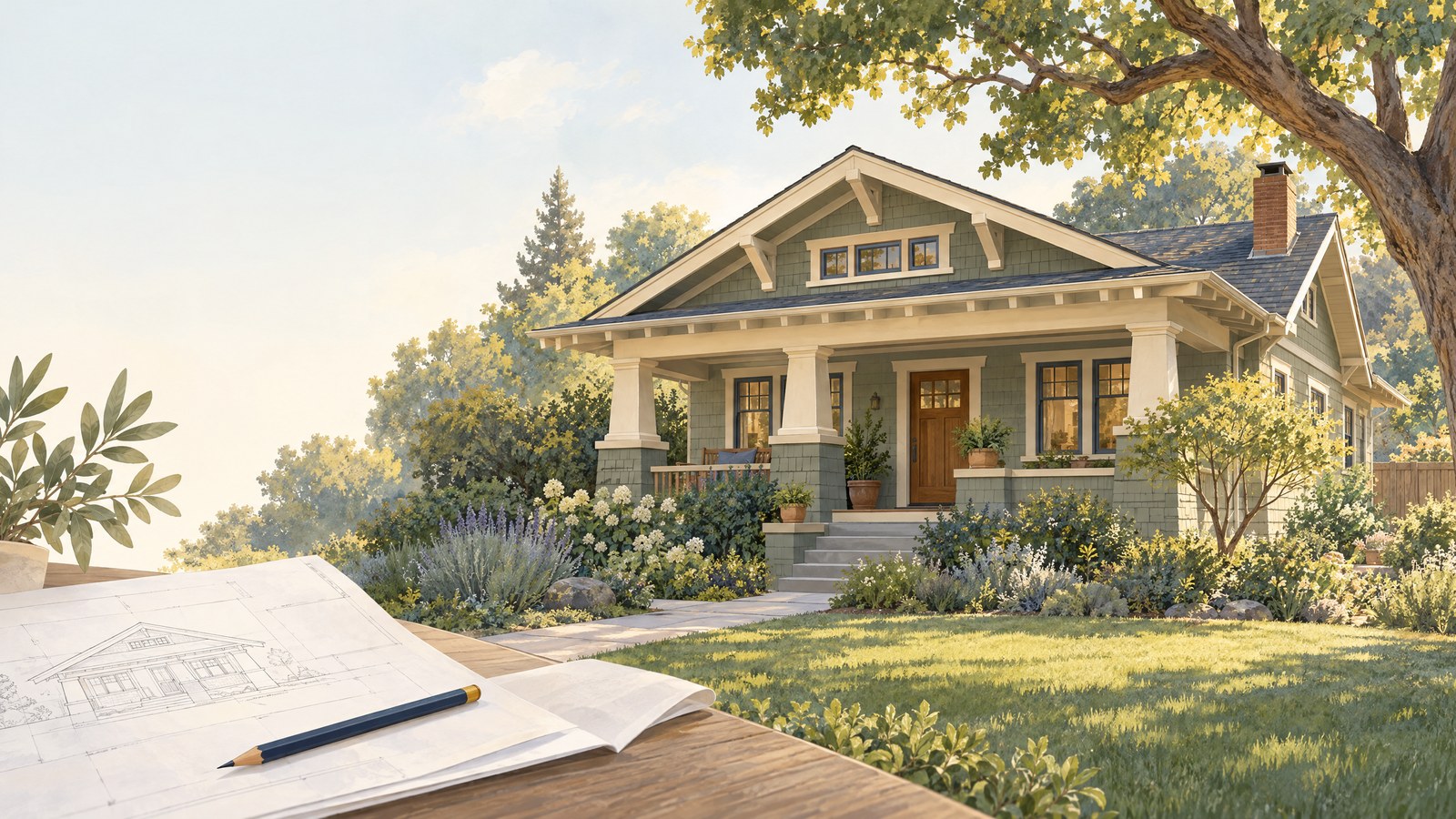
AI-generated editorial illustration of a fictional Craftsman home with generic drawings and a pencil; not an actual Palo Alto house, historic property or approved plans.
Sources
1 City of Palo Alto — Parcel Reports
2 City of Palo Alto — Project Review
3 City of Palo Alto — Historic Registers and linked inventory
4 City of Palo Alto — Historic Districts
5 City of Palo Alto — Historic Resources & Permit Review Requirements
6 Palo Alto Municipal Code — Section 16.49.050, Exterior alteration of historic structures
7 City of Palo Alto — Apply for a Planning Entitlement


