Selling a Los Altos Home: Check Remodel Permit Records
Before listing a remodeled Los Altos home, match the work buyers will see—and the words you plan to use in marketing—to the available permit, plan and inspection records. A permit number alone does not establish that the advertised remodel was covered or that its final inspection passed. Start this check before describing an addition, converted garage or remodeled room as “fully permitted.”
Northern California sellers commonly prepare disclosures and pre-listing inspection reports for buyers to review. That is a local preparation practice, not a universal legal requirement or a guarantee of a smoother sale. This check has a different purpose from choosing repairs: it helps you explain the remodel’s documented scope and completion status accurately.
Confirm the permitting authority for the parcel
These instructions concern the City of Los Altos, not the Town of Los Altos Hills. Do not choose a permit portal solely from the mailing address. Have the street address and assessor parcel number, or APN, ready and ask the responsible department to confirm jurisdiction before interpreting its records.
Santa Clara County’s official jurisdiction guidance directs owners to its Property Assessment Information System using an address or APN, or to the Assessor’s office at 408-299-5500, to verify jurisdiction and the Tax Rate Area. Use that as a starting point, then confirm the permitting authority with staff. An assessor description of rooms or square footage is not a building permit, approved plan or final-inspection record.
List the actual remodel before searching
Write a short project history: what changed, roughly when, who did the work and which documents you already have. Separate a kitchen remodel from an addition or a garage conversion, even if they happened around the same time. Gather contractor agreements, invoices, prior disclosures, permit cards, approved drawings and inspection records without assuming they all describe the same project.
Compare that history with the home today. Does the plan show the wall opening, bathroom or enclosed space that will appear in listing photographs? Does the permit description cover that work, or only another improvement at the address? Los Altos’s residential inspection handout says construction must comply with approved plans and that revisions must be submitted and approved before the work starts. For an existing remodel, request any approved revisions rather than treating the first plan set as the final design.
This is a document comparison, not a technical determination that the home matches every drawing. Ask a qualified architect, contractor or other appropriate professional to evaluate a physical discrepancy; ask City staff what the records establish.
Request the permit, plans and final result—not just a number
As checked November 21, 2026, the City’s eTRAKiT portal provides separate permit, inspection and planning-project areas. Start with Permit Search. The search page advises reducing search terms or removing characters when a search returns zero results.
An empty lookup is not proof of unpermitted work. Clarify the address, parcel, search terms and available records with the department. Nor does an unrelated permit found at the address prove approval of the remodel you are advertising.
The City’s portal lists the Building Department at 650-947-2752 and [email protected]. For a document request, the City’s NextRequest public-records portal offers Make Request. It explains that official records are held by City departments and the City Clerk under retention schedules. Ask which documents can be viewed or copied and what access requirements apply; do not assume every drawing or record will be available online.
Useful request wording—not an official City form—is:
For [street address and APN], please help identify the records for [specific remodel and approximate dates]. I am seeking the issued permit and its scope, available approved plans and revisions, inspection history and correction notices, the final-inspection result, and clarification of the current permit status and any remaining required sign-offs. Please advise how to view or obtain the available documents.
Keep the response with the seller’s files. If staff cannot locate a document, retain that response and describe the remaining uncertainty accurately rather than converting “not located” into “never permitted.”
Separate planning approval, issuance and completion
Los Altos’s Development Roadmap describes planning review, building-permit plan check, permit issuance, construction inspections and final inspections as distinct stages. A planning approval or design-review letter is not a substitute for the building permit. Approved plans show the reviewed design; they do not, by themselves, show that construction was completed or passed final inspection.
For each remodel, ask three questions: What work was approved? Was the building permit issued for that work? What is the documented final-inspection result? A scheduled final, an intermediate inspection or an issued permit is not the same evidence as a passed final for the relevant project.
The City’s residential inspection handout says required final inspections from other departments—including Planning, Engineering, Public Works and Fire—must be completed before requesting the Building Division’s final. Ask staff which sign-offs applied to the particular permit and whether the file shows them. Do not assume every remodel requires the same sequence.
A documented final concerns the permitted work. It is not a warranty of the entire home’s present condition, a blanket safety certification or proof that every later alteration was approved.
Reconcile the listing description and disclosures
Give your listing agent the project history, available records and unresolved questions before approving property copy. Describe the finished features without adding an unsupported approval claim. If records support only part of the work, do not use a whole-remodel statement such as “all work permitted and finaled.” Make clear which project each document covers.
For example, a kitchen-remodel permit would not, by itself, support a claim that a separately converted garage was approved as living space. This is an illustrative document mismatch, not a Caroline Hobbs client case. If a final result is unclear, ask the City to interpret the status rather than promising that a quick inspection will close the file. Any further application, investigation or corrective work depends on the property and the authority’s requirements; approval and timing are not assured.
Records do not replace applicable disclosures. The California Department of Real Estate explains that the seller is principally responsible for the property-condition disclosure. Civil Code Section 1102.1 preserves obligations to disclose facts materially affecting value and desirability, including relevant previously received physical-inspection reports. It also says an applicable transfer disclosure statement cannot be waived merely because the sale is “as is.” Discuss the actual transaction, known remodel history and unanswered record questions with your agent and, where needed, a qualified legal adviser.
If you may accept an offer within 18 months after taking title, also ask about Civil Code Section 1102.6h. It adds contractor-work and permit-information disclosure requirements for qualifying single-family sales. Its contractor-identification threshold and permit-copy provisions need transaction-specific review; this is not a requirement that every seller obtain a new permit before listing.
Put the records into your Los Altos listing plan
The Los Altos resource covers broader address-specific ownership considerations, while The Rise Group’s seller process explains how preparation and marketing fit your timing. Bring the remodel documents and open questions to that discussion before committing to listing language or a launch date.
For the separate physical-condition and repair-budget question, read Selling in Gilroy: Inspect Before Choosing Repairs. Its Gilroy permit instructions are not Los Altos instructions. Buying a Cupertino Home with an ADU: What to Verify shows why approved use and completion records matter for additional space, but its Cupertino municipal guidance should not be transferred to a Los Altos remodel.
You can also Explore Los Altos homes to review active listing context. Asking prices and listing descriptions are neither an appraisal of your home nor permit verification.
Book a seller consultation to discuss your listing priorities and timeline. If a next-home purchase is part of your move, Request the Buyer’s Guide.
By Caroline Hobbs | The Rise Group · Published November 21, 2026 · Official resources reviewed November 21, 2026. General educational information, not individualized legal, permitting, inspection, engineering or tax advice. Confirm address-specific records and requirements with the responsible authority and appropriate professionals.
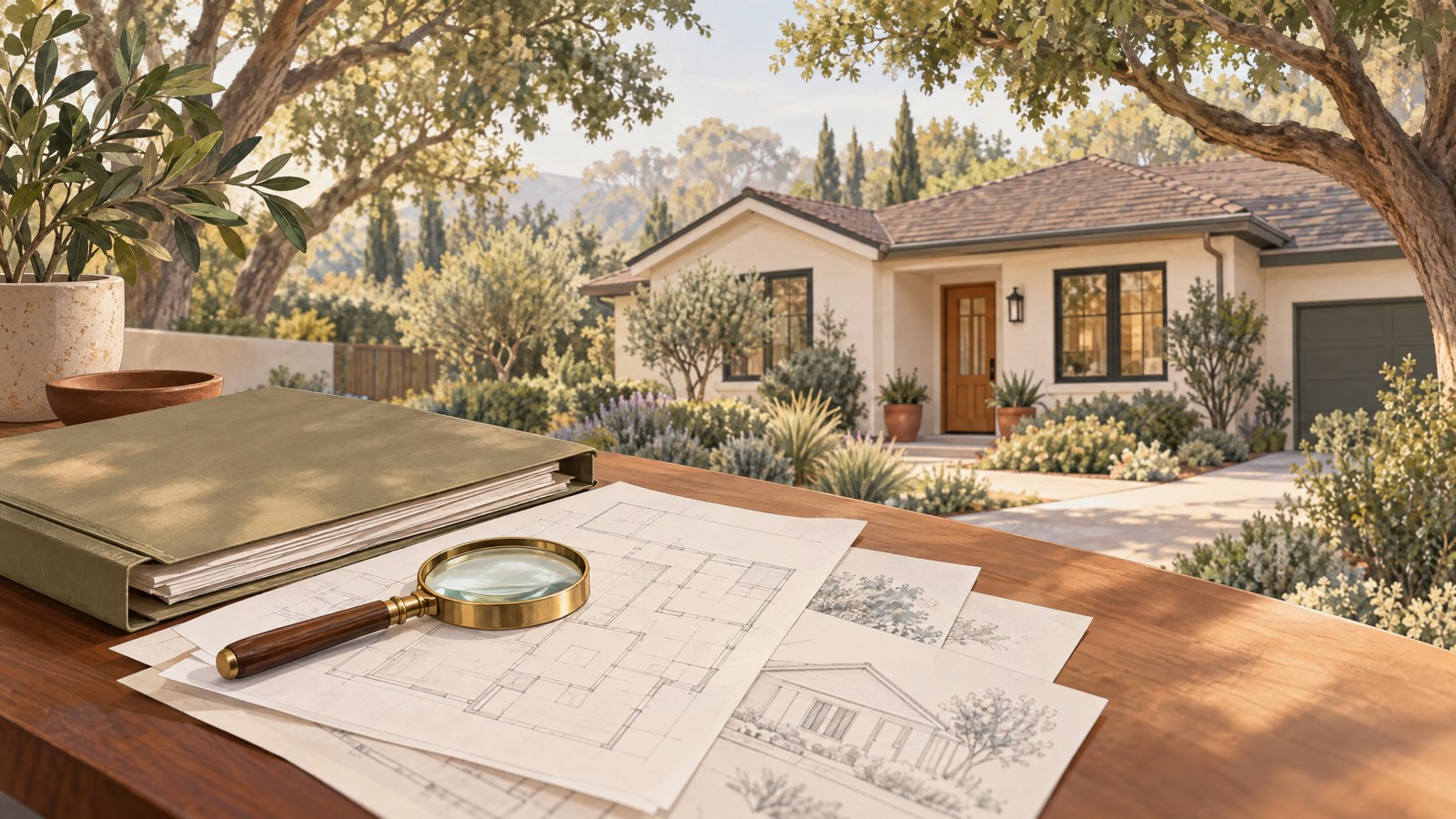
AI-generated editorial illustration of a fictional home and remodel records; not an actual Los Altos property or official permit record.


